
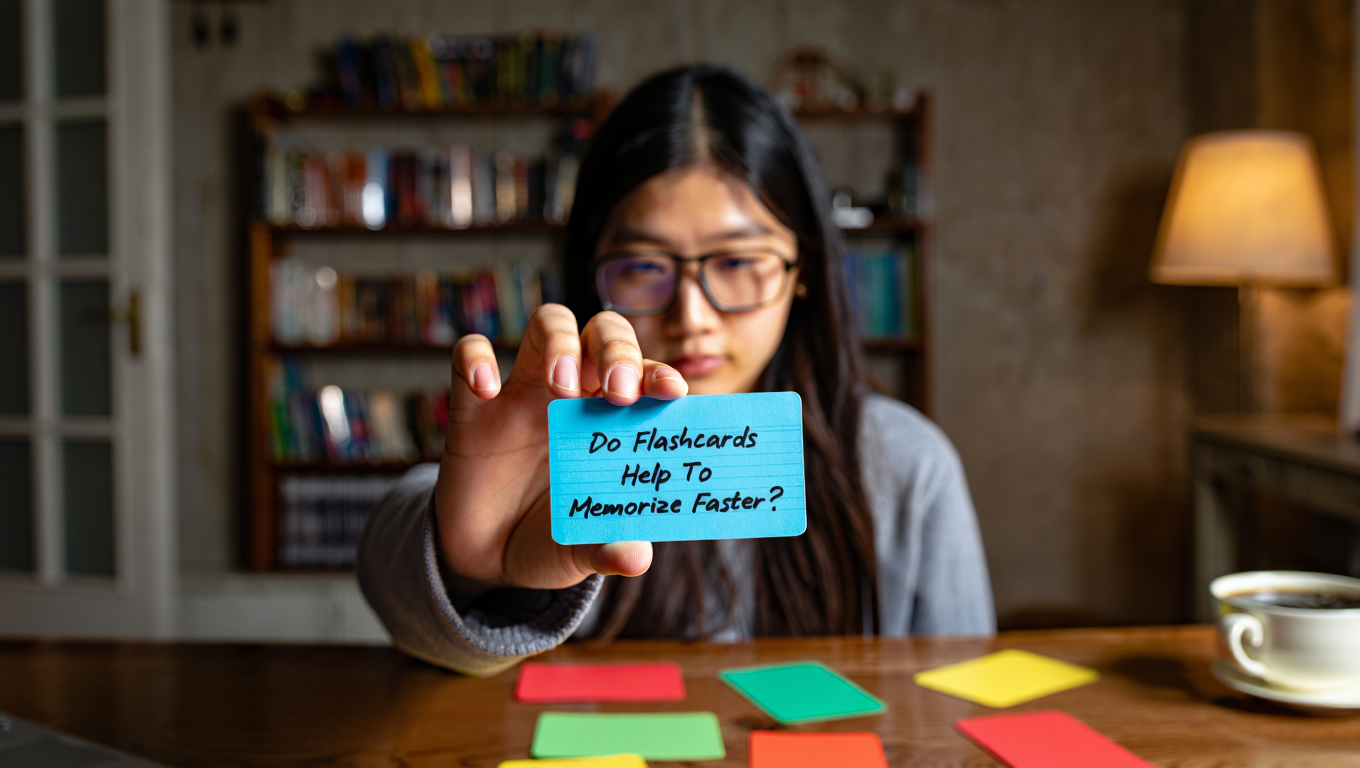
Flashcards rest on key cognitive principles: active recall and spaced repetition, both shown to improve long-term retention more than passive review. Research in educational psychology confirms that retrieving information via flashcards strengthens memory traces, making recall faster and more reliable under exam pressure. Moreover, using flashcards for language learning harnesses spaced intervals to embed vocabulary in long-term memory, an approach well-suited for mastering new words over weeks and months.
Nowadays it’s trendy to explore cutting-edge learning methods, but are flashcards effective in an era of innovation? Not all flashcard use is equally effective. Simply flipping through cards without a strategy can feel repetitive and yield limited gains. In this article, we examine do flashcards work, how they leverage learning science, and explore best practices to use them.
Spaced Repetition: The Key to Long-Term Retention
Spaced repetition elevates flashcards from basic review aids to effective learning boosters. Rather than memorizing everything in one session, revisiting cards at planned intervals promotes the transfer of information into long-term memory. Research indicates that learners who follow a spaced schedule retain 80% of material, even months after initial study.
For example, instead of drilling the German noun “der Hund” repeatedly in a single day, you might review it once today, again tomorrow, and then after three days. Each correct recall extends the next interval, ensuring that challenging items receive more frequent attention while mastered items appear less often.
Flashcards for students transforms simple review into a science-backed system that targets difficult items more frequently while easing off on mastered content. Many AI flashcard maker platforms implement spaced algorithms that adjust intervals based on your recall performance. This adaptive scheduling ensures that you focus on what you haven’t yet solidified, optimizing study time and reducing unnecessary repetition.
Flashcards and Metacognition: Becoming a Better Learner
So, why are flashcards effective? Metacognition — thinking about your own thinking — helps learners monitor and regulate their study strategies. Flashcards naturally support metacognitive processes by prompting you to judge how well you recall each item and adjust your review accordingly. When you attempt to retrieve an answer from memory and then check the answer on the card, you gain immediate insight into your level of mastery. This moment-by-moment self-evaluation fosters greater awareness of which concepts need more attention and which are securely learned.
Self-monitoring through retrieval practice
Each flashcard session invites you to assess your recall: you quickly sense whether an item is “easy,” “borderline,” or “difficult.” This continuous feedback loop guides you to allocate study time effectively, spending more effort on challenging cards and reducing time on those you’ve mastered. Over time, this practice builds an internal map of your strengths and gaps at a granular level. For example, noticing repeated errors on particular vocabulary terms or formulas signals a need for deeper review or alternative mnemonic strategies.
Planning and strategy adjustment
Metacognition involves not only monitoring but also planning how to study. Flashcards aid planning by revealing patterns: if you observe that certain topics consistently require extra reviews, you can adjust your study schedule, incorporate additional resources, or seek clarifications before moving on. This strategic flexibility ensures that your study sessions remain targeted and efficient rather than rote.
Enhancing metacognitive accuracy
Research shows that using flashcards with self-explanation or in peer study can improve metacognitive judgments. Explaining why an answer is correct or teaching a peer reinforces understanding and exposes hidden misconceptions.
Additionally, some digital flashcard platforms prompt you to rate your confidence after each recall attempt, strengthening your ability to judge what you truly know versus what feels familiar. Over time, this honed calibration between perceived and actual mastery, enabling more effective use of study time.
Reflective review and growth
Beyond individual sessions, periodic reflection on flashcard performance supports long-term growth. Reviewing performance analytics — such as which cards took the longest to learn or which topics required the most repetitions — helps set future learning goals. You might plan supplementary practice, consult additional materials, or use quizzes to validate comprehension in context. By combining flashcard-driven retrieval with reflective planning, you cultivate a self-regulated study routine that continuously evolves with your learning needs.
In sum, flashcards do more than reinforce memory: they engage metacognitive skills by making your knowledge gaps visible and guiding strategic adjustments. When used intentionally — through self-assessment, confidence ratings, peer discussion, and reflective review — flashcards become a powerful tool for becoming a more effective, self-aware learner.
Digital vs. Paper Flashcards: What Works Best?
As students explore modern learning hacks, it’s natural to wonder what are flashcards and which of them are effective for study routines. Choosing between digital and paper flashcards depends on your study context, preferences, and learning goals. Both formats leverage active recall and can employ spaced repetition, but they differ in convenience, engagement features, and cognitive effects.
Convenience and accessibility
Digital flashcards shine in terms of portability and ease of access. With an online flashcard maker or dedicated app, you can study anytime on your phone or computer — whether you’re commuting, waiting in line, or taking a break between classes.
A study among college students found that 77.8% used digital flashcards, and over 60% preferred them for convenience, unlimited storage, and access to pre-made decks. In contrast, paper flashcards require carrying physical cards or index boxes, which may be less practical for on-the-go study.
Features and engagement
Digital platforms often include gamified elements, instant performance metrics, and automated spaced repetition scheduling. For example, an AI flashcard maker can auto-generate cards from notes, remind you when to review, and track which items need more practice. These features boost engagement and help maintain consistent study habits.
Paper flashcards lack built-in analytics but can offer tactile engagement: writing cards by hand and physically handling them may strengthen encoding for some learners. An IB Psychology discussion noted that for advanced learners or certain subjects, paper flashcards sometimes improved delayed recall more than digital versions, suggesting that physical interaction can deepen learning in some cases.
Customization and content volume
Digital flashcards scale easily: you can manage large decks without physical clutter, categorize cards, and sync across devices. Pre-made sets from online libraries accelerate preparation, especially when using an online quiz maker or AI tools later to test comprehension.
Paper flashcards require manual creation and organization, which can be time-consuming for extensive material. However, the act of handwriting may itself aid memory consolidation, so combining both — writing critical cards by hand and using digital decks for bulk review — can leverage the strengths of each format.
Cognitive load and focus
Digital flashcards may introduce distractions if notifications or other apps compete for attention. Choosing a minimalist interface or “focus mode” in an app helps mitigate this. Paper flashcards offer a distraction-free environment — no screens or notifications — potentially aiding deep focus during review. Yet, shuffling large paper decks can be cumbersome compared to quick digital searches. If you need to isolate difficult items rapidly, digital filtering features can be advantageous.
Spaced repetition implementation
Both formats can implement spaced repetition. Digital flashcard makers often automate scheduling using algorithms, ensuring reviews occur at optimal intervals without manual tracking. With paper flashcards, you can use the Leitner system — sorting cards into boxes or piles based on recall success — but this requires manual organization and record-keeping.
For learners who prefer a low-tech approach or wish to reinforce memory through physical handling, the Leitner method remains effective; however, digital automation reduces administrative burden and minimizes missed review opportunities.
Cost and accessibility
Many digital flashcard services, like pdfstudy.ai, offer free tiers, allowing basic deck creation and scheduling. Paper flashcards cost only index cards or paper, making them accessible without technology. If budget or internet access is limited, paper flashcards remain a reliable option. When possible, combine free digital tools with paper for maximal flexibility.
Recommendation. For most exam preparation, begin with digital flashcards for convenience, automated spaced repetition, and large-volume study. Use paper flashcards selectively when tactile engagement or focused, distraction-free sessions are preferred.
Personalization: Why Custom Flashcards Work Better
Creating your own flashcards taps into the self-reference effect, where relating information to yourself enhances memory encoding and recall. When you design custom cards, you choose wording, examples, or contexts that resonate with your experiences or study goals. This personal connection makes prompts more meaningful and boosts engagement compared to generic, pre-made decks.
Custom flashcards also allow you to tailor content to your specific knowledge gaps. As you review material, you quickly identify which facts or concepts challenge you most; then you create or refine cards that target these weak points. This focused approach aligns with the principle of desirable difficulty, introducing just the right level of challenge to strengthen learning pathways
Moreover, personalization supports varied learning strategies. You might add mnemonic cues that fit your thought patterns, include images tied to your interests, or frame questions in ways that connect with real-world scenarios you encounter.
As you explore different study strategies, you might ask: are flashcards effective for language learning when combined with real-life conversation practice? For language learners, crafting sentences that reflect your daily life helps embed vocabulary more deeply. By customizing the format—such as cloze deletions, example-driven prompts, or multi-field notes — you engage multiple cognitive processes, reinforcing retention.
Finally, custom flashcards foster metacognitive awareness. The act of creating and editing cards makes you reflect on what you know and where you need more practice. Tracking your performance on these tailored cards provides granular feedback: you see exactly which personalized prompts still need review.
This iterative cycle of creation, testing, and refinement ensures your study sessions remain efficient and aligned with your evolving learning needs. In sum, custom flashcards leverage self-reference, desirable difficulty, and metacognition to deliver a more effective and engaging study experience.
Best Practices for Creating Effective Flashcards
Following these guidelines ensures your flashcards maximize learning and retention:
1. Leverage AI for fast, comprehensive card generation
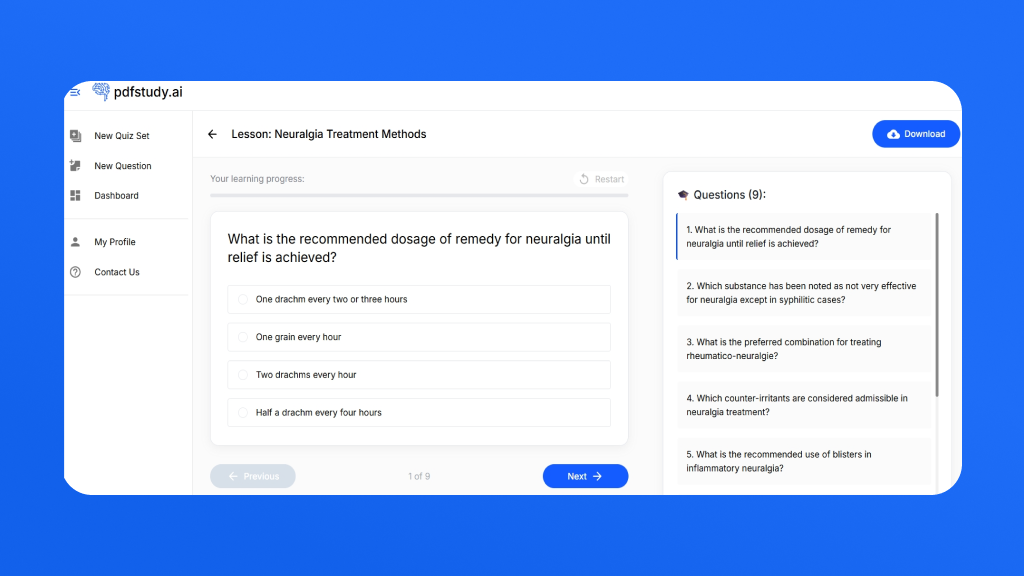
Manual card creation can be time-consuming, especially for large documents. An AI flashcard maker like pdfstudy.ai streamlines this process. Service uses AI to model questions that closely match your material, ensuring the flashcards are as relevant as possible. This approach saves hours of manual typing and ensures you cover all key concepts, leaving you free to focus on understanding rather than formatting.
2. Focus on each card on a single concept
Avoid crowding a card with multiple facts. Each flashcard should target one discrete item — such as a definition, formula, or concept — so your recall efforts remain focused. If a topic has related subpoints, break them into separate cards or a small, coherent cluster. This clarity aligns with active recall principles and prevents cognitive overload.
3. Write clear, concise prompts and answers
Use straightforward language for prompts (front side) and concise, accurate responses (back side). For example, instead of “Explain photosynthesis,” ask “What are the main steps of photosynthesis?” and list them succinctly on the reverse. Clear wording reduces ambiguity during review and ensures you test precise understanding.
4. Personalize content for deeper engagement
Customize cards with examples, contexts, or mnemonic cues that resonate with your experience. If studying history, tie dates to memorable events in your life; for language learning, craft sentences reflecting your interests. Personalization strengthens the self-reference effect, making recall easier and study sessions more engaging.
5. Incorporate spaced repetition scheduling
Use a flashcard platform or app with built-in spaced repetition. After creating your cards, schedule reviews at optimal intervals. The system will surface challenging cards more often and push mastered ones out to longer intervals. This adaptive timing cements information in long-term memory without unnecessary repetition.
6. Include visuals and context when relevant
For subjects benefiting from imagery (e.g., anatomy diagrams, geographic maps, chemical structures), add images or diagrams to cards. Visual cues can anchor concepts more vividly.
7. Regularly review, update, and prune
After initial creation and several review sessions, identify cards that are outdated, incorrect, or no longer needed. Remove or revise them promptly to keep your deck lean and accurate. Periodic pruning prevents clutter and maintains study efficiency.
8. Track performance and adjust focus
Monitor which cards take longer to recall or are frequently missed. Use analytics in your flashcard platform to spot these weak areas. Then either refine those cards with clearer prompts or add supplementary cards that break down complex sub-concepts. This targeted refinement enhances metacognitive awareness and directs effort where it matters most.
Flashcards Beyond Memorization: Critical Thinking and Understanding
While flashcards are often associated with rote memorization, their true potential lies in their adaptability as tools for cultivating critical thinking and genuine understanding. Moving beyond simple recall, flashcards can foster higher-order cognitive skills if constructed and used thoughtfully.
To promote critical thinking, flashcards must evolve from mere question-answer prompts to nuanced challenges that encourage analysis, synthesis, and evaluation. One effective approach is to construct prompts that require learners to engage with concepts at a deeper level. This includes:
- Application: Instead of asking for a fact, prompts can require the learner to apply a concept to a novel scenario. For example, presenting a real-world problem and asking which theory best explains it, or how a principle would influence decision-making in that context.
- Analysis and comparison: Questions can encourage the breaking down of complex ideas or comparing and contrasting related concepts. For example, “How would outcome X differ if variable Y were changed?” or “Compare the strengths and limitations of two different philosophical arguments.”
- Justification and reflection: Flashcards can ask learners not just for an answer, but for a justification. “Why is this method more effective than others in this scenario?” or “What evidence supports this interpretation?” can deepen understanding through argumentation and self-explanation.
Critical thinking thrives when learners are prompted to see relationships among concepts. Flashcards can be formatted to require the drawing of connections between ideas—for example, matching theories to real-life case studies, or linking historical events to contemporary issues. This approach supports conceptual mapping and holistic understanding.
Research shows that self-explanation and metacognition are powerful learning tools. Flashcards can incorporate prompts for learners to reflect on their reasoning process, assess their confidence, or identify gaps in their own knowledge.
Top Digital Tools That Use Flashcard Science Right
Advances in AI have reshaped flashcard platforms, making it faster and more intuitive to turn study materials into effective review decks. After evaluating over 50 services, we’ve highlighted four standout tools that integrate smart features — especially AI — to streamline flashcard creation, scheduling, and review.
1. pdfstudy.ai
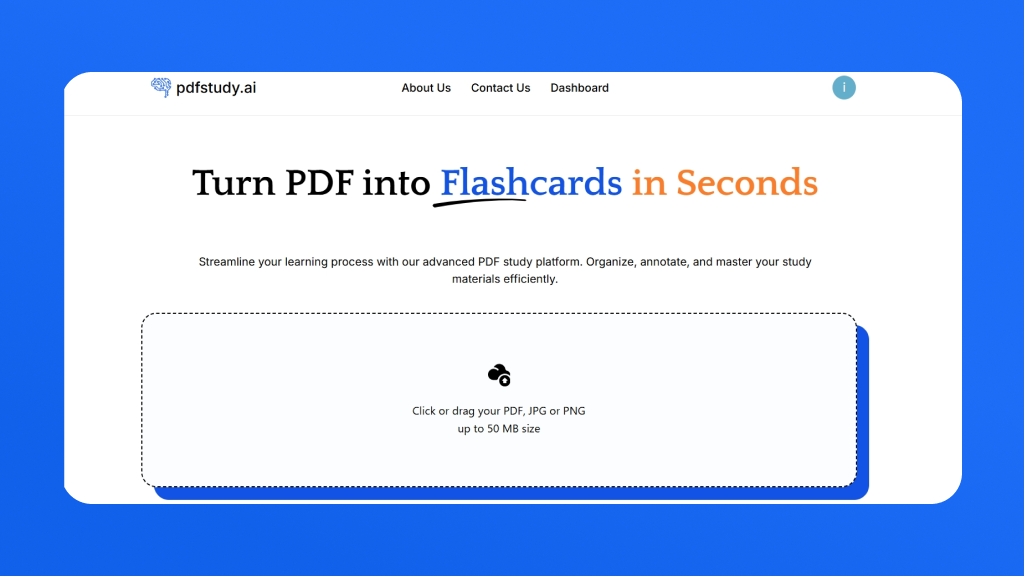
In 2025, pdfstudy.ai leads the pack with its focus on speed, accuracy, and simplicity. Users upload a PDF, notes, or other documents, and the AI parsing engine extracts key concepts to form well-structured cards in seconds. This capability makes it ideal for anyone—from students cramming for exams to professionals reviewing technical materials—who needs to convert large volumes of text into study-ready flashcards without manual effort.
Strengths:
- Instant AI parsing: Generates cards from diverse document types quickly, covering even lengthy or technical content.
- Minimal editing required: Produces ready-to-review cards that typically need only light tweaks.
- Clean interface: Distraction-free environment with straightforward navigation and no ads.
- Built-In spaced repetition: Automatically schedules reviews for long-term retention.
- Handles large files: Supports extensive documents and slide decks without slowdown.
Limitations:
- Limited social/gamification features: Lacks extensive community-sharing or competitive study modes found in some other tools.
- Minimal visual customization: Prioritizes a minimalist design, which may feel basic for users seeking elaborate styling.
pdfstudy.ai’s emphasis on productivity over fluff makes it a top choice for serious learners who value rapid, accurate flashcard creation and reliable review scheduling.
2. Anki
Anki remains a staple for spaced repetition enthusiasts who require deep customization. It supports rich media—images, audio, LaTeX formatting—and allows creation of complex card types. This flexibility suits advanced learners (e.g., medical or language students) who build detailed decks tailored to niche subjects.
Anki excels for users willing to invest time in crafting and customizing decks, but may be less appealing to those seeking quick, automated flashcard generation.
3. Quizlet
Quizlet’s approachable design and interactive study modes (“Match,” “Learn”) have made it popular among a broad audience. While not fully AI-driven for document parsing, it has introduced features like auto-suggested definitions and limited automation to ease card creation. Its vast library of community-created sets offers quick starting points for many topics.
Quizlet works well for quick setups and interactive review, but serious learners handling extensive materials may find its automation and customization capabilities limited.
Final Thoughts: Making Flashcards Work for You
Effective flashcard use hinges on intentional design and consistent practice. Personalizing cards to your own examples and refining prompts for clarity ensures that each review session feels relevant rather than rote.
Beyond simple recall, crafting prompts that require explanation or application encourages critical thinking and helps connect facts into a coherent framework. Regular, short sessions fit naturally into daily routines and build momentum over time.
By reflecting on which cards remain challenging and adjusting your approach accordingly, you maintain a growth mindset that turns mistakes into learning opportunities. When flashcards are tailored, spaced wisely, and paired with strategic quizzes, they become a powerful engine for lasting retention and confident performance.